Wiggle guide
Shoulder Stretches Before Bed: A Gentle 5-Minute Routine
Try four gentle shoulder stretches before bed for tight shoulders and chest, with a simple 5-minute wind-down and clear stop signs.
shoulder stretches before bed

Tight shoulders have terrible timing. The day is over, you are ready to sleep, and suddenly every pillow position makes your upper body feel more noticeable.
Use shoulder stretches before bed as a gentle five-minute downshift, not a flexibility test. The fastest rule is simple: choose four slow moves, keep the sensation mild, breathe normally, and finish before the routine starts feeling like exercise.
What are shoulder stretches before bed?
Shoulder stretches before bed are low-effort movements for the shoulders, chest, and upper back performed during a nighttime wind-down. They are meant for ordinary mild tightness, not for diagnosing or treating an injury. A useful bedtime stretch feels controlled, allows normal breathing, and never requires forcing the arm through pain.
The goal is repeatability. You need enough movement to change positions after a screen-heavy or sedentary day, but not so much intensity that bedtime becomes another performance target.
Which shoulder stretches should you do before sleep?
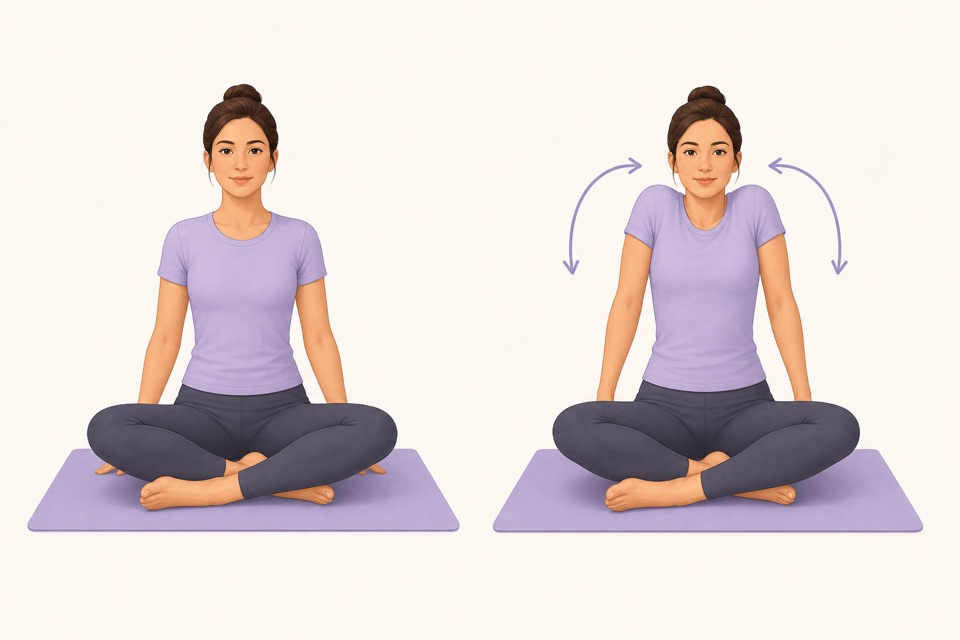
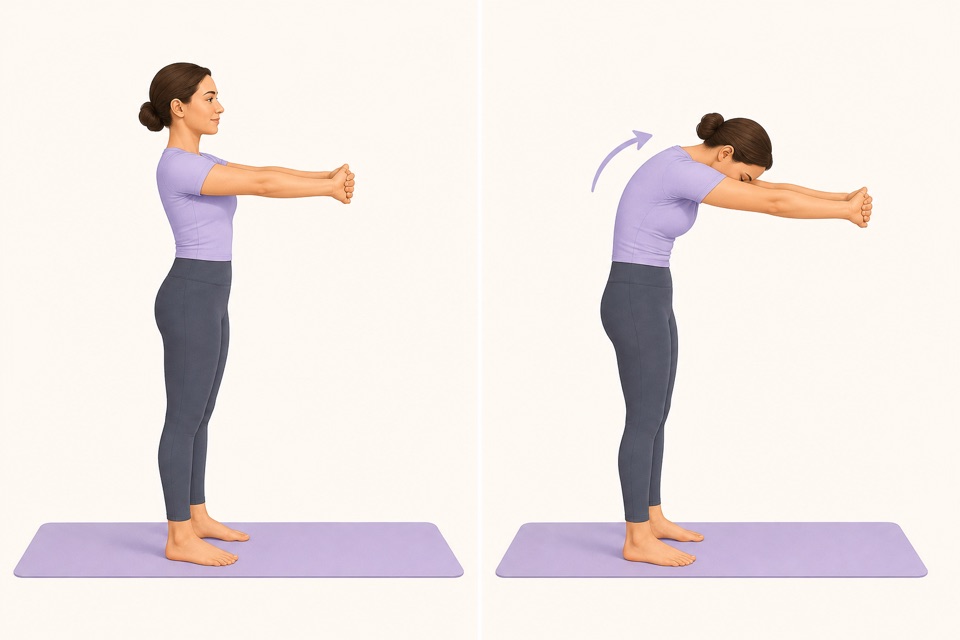
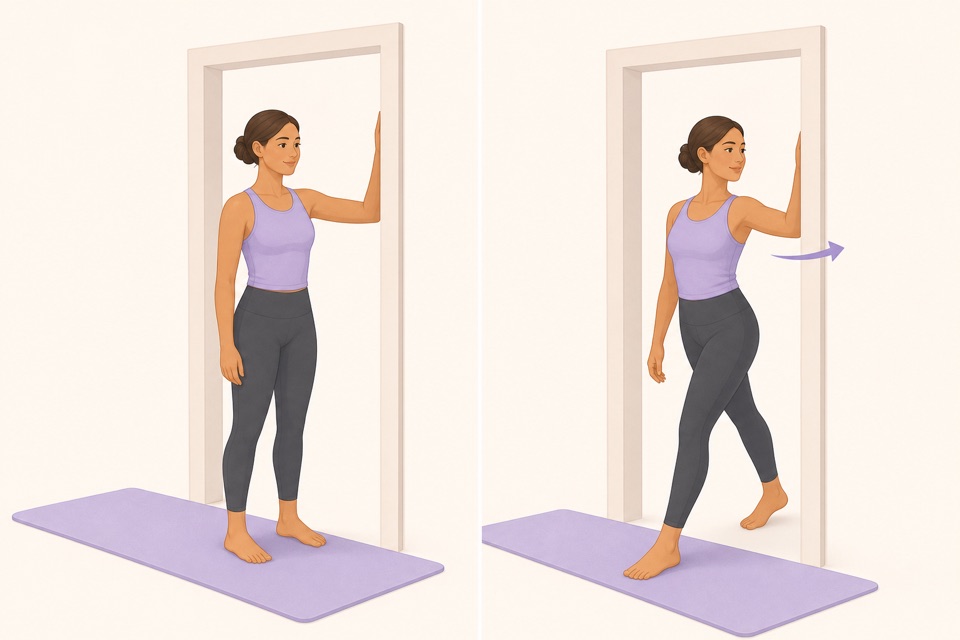
Choose movements that cover four jobs: circle the joint gently, stretch the back of the shoulder, open the chest, and reach the upper back. Shoulder circles, a cross-body stretch, a doorway chest stretch, and a supported wall reach make a balanced sequence without floor equipment.
| Move | Time | Main area | Bedtime cue | | --- | --- | --- | --- | | Backward shoulder circles | 45 seconds | Shoulders and upper back | Make the circles slow, not large | | Cross-body shoulder stretch | 30 seconds per side | Back of shoulder | Pull above the elbow, never on the joint | | Doorway chest stretch | 30 seconds per side | Chest and front shoulder | Step forward only until mild tension | | Supported wall reach | 60 seconds | Upper back and shoulders | Keep ribs relaxed and breathe | | Shoulder blade squeezes | 45 seconds | Mid-upper back | Use half effort and release fully |
If your neck is also doing too much work, pair this with the gentler moves in neck stretches before bed, rather than adding more shoulder intensity.
How do you do a 5-minute bedtime shoulder routine?
Stand beside the bed or sit upright with both feet supported. Complete one easy round, moving slowly enough to notice pinching before it builds. The routine should leave you calmer, not sweaty, breathless, or sore.
- Take two slow breaths and let your arms hang comfortably.
- Roll both shoulders backward for 45 seconds.
- Bring one arm across your chest and hold above the elbow for 30 seconds per side.
- Place one forearm against a doorway and step forward gently for 30 seconds per side.
- Put your hands on a wall, sit your hips back slightly, and reach long for 60 seconds.
- Finish with slow shoulder blade squeezes for 45 seconds.
From Wiggle
Recommended moves
Why do shoulders feel tight at night?
Shoulders may feel tight at night after hours of laptop work, phone use, driving, carrying bags, training, or unconsciously holding tension. Quiet bedtime conditions can also make sensations more noticeable because the distractions of the day have stopped.
That does not mean every sore shoulder needs stretching. Position changes, calm breathing, or rest may be the better choice. If a movement creates a pinching feeling at the front or top of the shoulder, reduce the range or skip it.
Should you use a doorway stretch or a sleeper stretch?
For a general bedtime routine, the doorway stretch is the simpler default because it opens the chest while you control the range by stepping forward or backward. A sleeper stretch places the shoulder in a more specific position and is easier to force, so it is better used only when a clinician or coach has shown you why and how.
| If you notice… | Start with… | Avoid… | | --- | --- | --- | | Rounded, screen-heavy posture | Doorway chest stretch | Leaning hard into the frame | | Tightness behind the shoulder | Cross-body stretch | Pulling directly on the elbow joint | | General upper-back stiffness | Supported wall reach | Forcing the head below the arms | | Sharp or unexplained night pain | Rest and professional guidance | Testing progressively deeper stretches |
When should you skip bedtime shoulder stretches?
Skip the routine after a new injury or when pain is sharp, severe, worsening, or accompanied by swelling, deformity, numbness, tingling, weakness, chest pain, or trouble breathing. Seek urgent care for emergency symptoms. Persistent shoulder pain that wakes you or limits normal movement deserves assessment from a qualified healthcare professional.
Mayo Clinic recommends smooth, controlled stretching without bouncing or stretching into pain. MedlinePlus also notes that shoulder symptoms can come from several structures and causes, which is why an unexplained painful shoulder is not something to diagnose with a bedtime routine.
How can Wiggle make bedtime stretching easier?
Wiggle turns the routine into a timed sequence, so you do not need to search for moves or watch the clock when you are already tired. Pick a short session, follow one cue at a time, and let five gentle minutes count.
For a whole-body option, use the night stretching routine. If you want an even softer sequence, try relaxing stretches before bed. You can also download Wiggle and save a wind-down that fits your evening.
When the tightness is more noticeable after sleep, switch to morning shoulder stretches, which begin with easy movement before any holds.
Sources
Why we keep it gentle
These guides are written for everyday stiffness and habit-building. They are grounded in mainstream guidance on flexibility, movement, and when to seek medical help.
- Stretching: Focus on flexibilityMayo Clinic
- Shoulder injuries and disordersMedlinePlus
- About SleepCDC
FAQ
Questions people ask
Are shoulder stretches before bed a good idea?
Gentle shoulder stretches before bed can help you wind down when your shoulders feel mildly tight after sitting, screens, driving, or training. Keep the effort easy, breathe normally, and stop if you feel sharp pain, numbness, tingling, weakness, dizziness, or symptoms that spread down an arm.
How long should a bedtime shoulder routine take?
Four to six minutes is enough for a simple routine. Spend about 30 to 45 seconds on each movement and repeat only the stretches that feel comfortable. A short routine you actually repeat is more useful than an intense session that disrupts bedtime.
What are the best shoulder stretches before sleep?
Start with shoulder circles, a cross-body shoulder stretch, a gentle doorway chest stretch, and a supported child's pose or wall reach. These movements cover the shoulders, upper back, and chest without requiring a hard workout or complicated setup.
Can I do shoulder stretches in bed?
Some gentle movements, such as shoulder blade squeezes and a supported overhead reach, can be done sitting or lying in bed. Use a wall or doorway for a chest stretch, and avoid balancing or forcing your arm into a position that feels pinchy.
When should I not stretch a sore shoulder?
Skip stretching after a new injury or when pain is severe, sharp, worsening, or paired with swelling, deformity, chest pain, trouble breathing, numbness, or weakness. Persistent night pain or symptoms that interrupt sleep deserve advice from a qualified healthcare professional.