Wiggle guide
Lower Back Stretches Before Bed: A Gentle 6-Minute Wind-Down
Lower back stretches before bed for mild night stiffness, with a gentle 6-minute routine, sleep-friendly pacing, and clear stop signs.
lower back stretches before bed
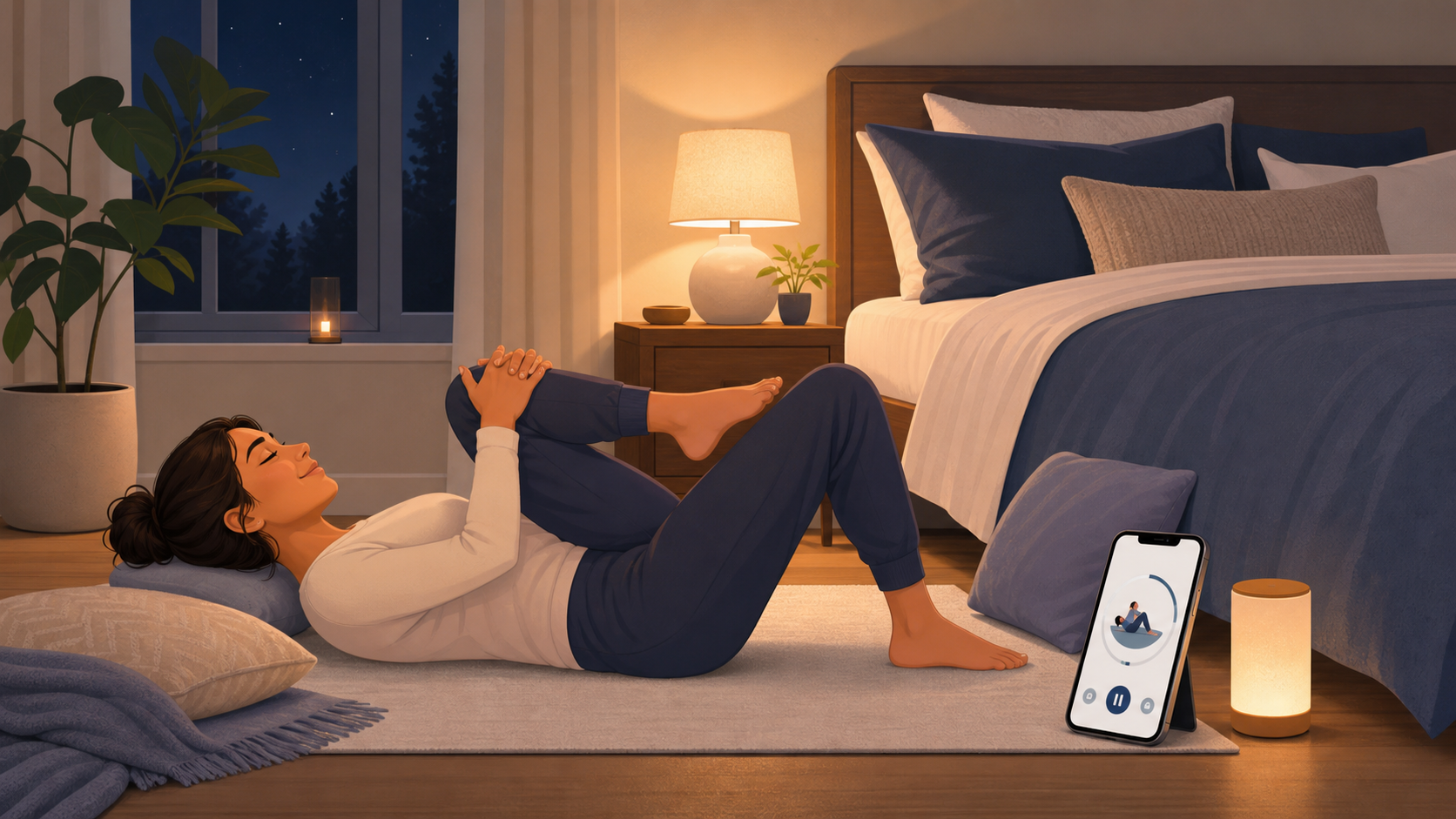
The annoying part of lower-back stiffness at night is that your motivation is already gone. You do not want a workout. You do not want a lecture about posture. You want your back, hips, and glutes to stop feeling like they carried the whole day into bed.
Use these lower back stretches before bed when the problem is mild night stiffness, not sharp pain or a medical issue. The fast rule is simple: keep the routine under seven minutes, stay at mild tension, and stop before stretching becomes effort.
If lying down itself is the bigger problem, start with how to sleep with lower back pain. If you need a no-floor option, use lower back pain stretches in bed. If the same stiffness is loud in the morning, use lower back stretches after waking up. If the stiffness feels more full-body, stretches for better sleep gives you the broader wind-down.
What are lower back stretches before bed?
Lower back stretches before bed are short, low-intensity movements used as a wind-down cue for mild lower-back, hip, and glute stiffness at night. They work best when they feel calm, predictable, and easy enough to repeat when you are already tired.
Lower back stretches before bed are not a treatment plan, diagnosis, or pain test. Think of them as a small transition between the sitting, standing, driving, lifting, or screen time of the day and a supported sleep setup.
Mayo Clinic's stretching guidance gives the right standard: avoid bouncing, avoid pain, and breathe normally. At bedtime, that means smaller range, slower movement, and a clear ending.
What 6-minute lower-back routine should I use tonight?
Use a 6-minute lower-back routine that starts with support, moves through the back and hips, and ends before you feel warmed up. If a movement makes you brace, shrink the range or skip it.
| Move | Time | Why it fits bedtime | Easier version |
|---|---|---|---|
| Supported breathing | 45 sec | Lets the back settle before movement | Pillow under knees |
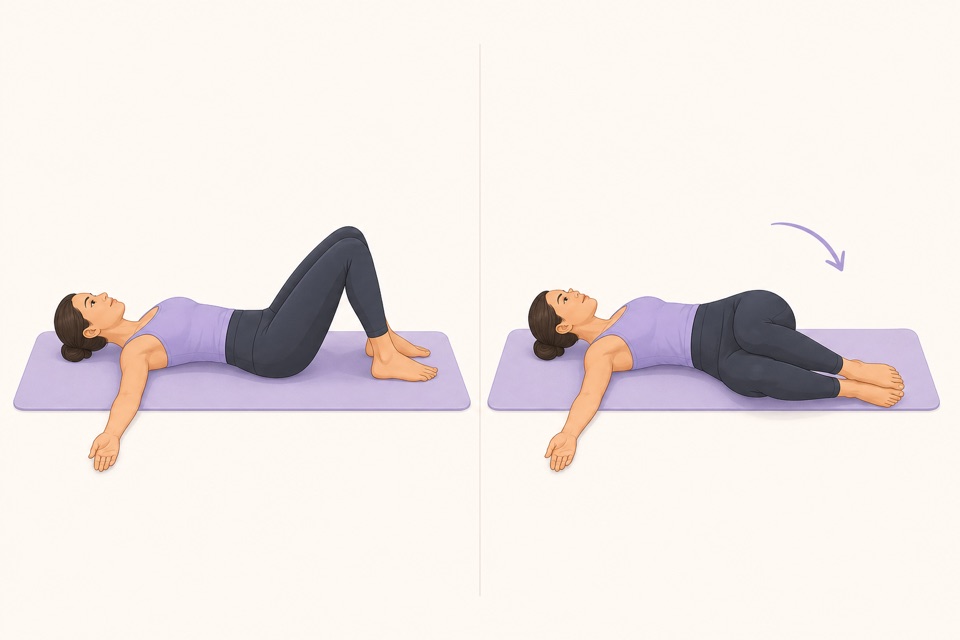
| Lower trunk rotations | 75 sec | Adds gentle back and hip motion | Move knees only a few inches |
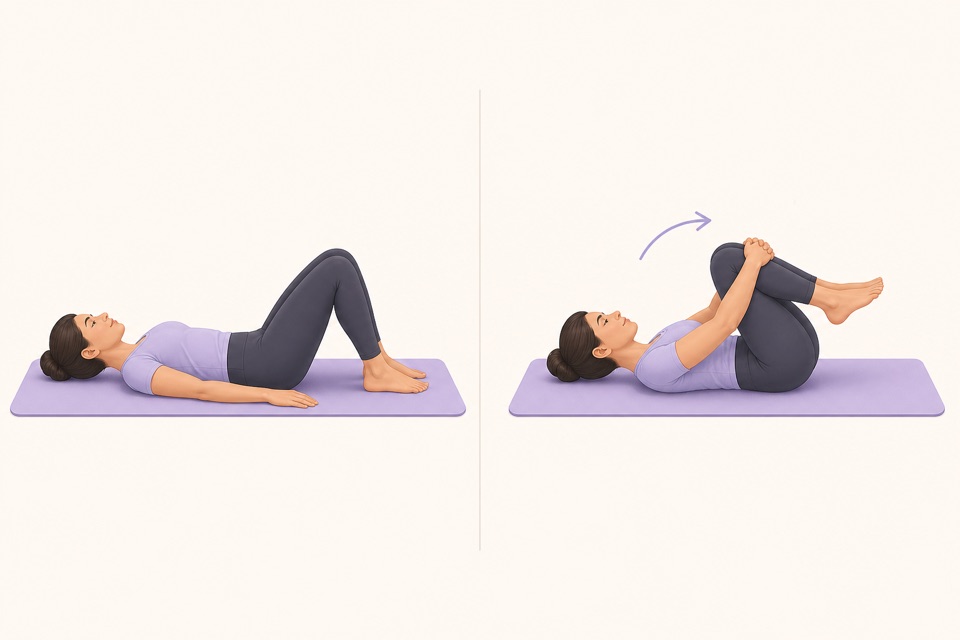
| One-knee-to-chest | 90 sec | Eases glute and lower-back stiffness | Hold behind the thigh |
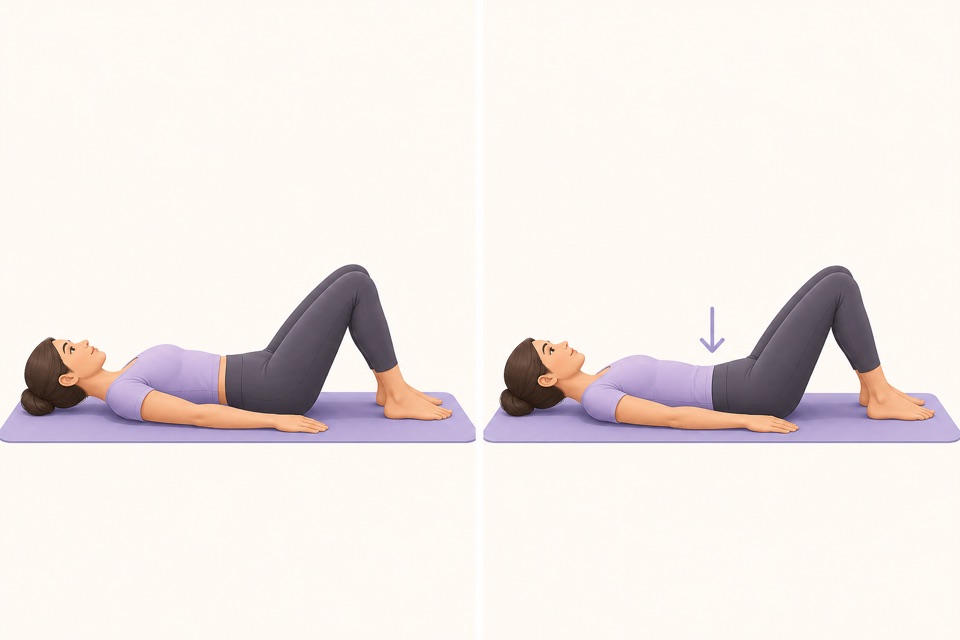
| Pelvic tilts | 60 sec | Gives the lower back tiny controlled movement | Make the motion barely visible |
| Relaxed figure-four | 90 sec | Targets outer hip tension that can tug on the back | Keep the crossed leg farther away |
| Quiet breathing | 60 sec | Creates a clean ending | Roll to your side if better |
If you only have energy for three minutes, do the first three moves and stop. A short routine you repeat is better than a perfect routine you abandon.
From Wiggle
Recommended moves
Should I stretch on the floor, in bed, or seated?
Choose the setup that makes the routine easy to start and easy to stop. The floor gives firmer support, the bed lowers friction, and a chair is useful when getting down to the floor feels like too much at night.
| Tonight's situation | Use this setup | Avoid |
|---|---|---|
| You want the back supported evenly | Floor or mat | A mattress that sinks unevenly |
| You are already under the covers | In-bed version | Getting up for a routine you will skip |
| Balance or fatigue is an issue | Chair-supported movement | Unsupported standing stretches |
| Your back dislikes twisting | Small floor rotations | Deep end-range twists |
| You keep searching for videos | Guided app timer | Choosing a new routine every night |
For a broader mat routine, use good stretches before bed. For a calmer app setup, stretching app for sleep explains how to save one repeatable routine before the night gets noisy.
Can lower back stretches before bed help sleep?
Lower back stretches before bed cannot guarantee sleep, but they can help create a calmer wind-down when stiffness is the thing keeping your body busy. The useful part is the repeatable cue: same short sequence, same low effort, same stop point.
CDC sleep guidance emphasizes consistent sleep habits. Bedtime stretching fits that idea when it behaves like a small habit, not a dramatic fix. Keep the routine predictable enough that your tired brain does not have to negotiate with it.
Use this sleep-friendly checklist:
- Keep the first routine under seven minutes.
- Stretch at mild tension, not impressive range.
- Breathe normally through every move.
- Avoid bright scrolling once the routine starts.
- End with the same final breathing cue.
- Stop if you feel more alert, irritated, braced, or worried.
- Repeat the same routine for a week before changing it.
What should I avoid if my lower back feels stiff at night?
Avoid anything that turns bedtime stretching into a test: deep twists, aggressive hamstring pulls, bouncing, breath-holding, and pushing through pain. Night stretching should feel like downshifting, not training.
Use this decision table:
| What you notice | Do this | Do not do this |
|---|---|---|
| Mild lower-back tightness | Small rotations and breathing | Force a deep twist |
| Hip or glute tension | Easy figure-four range | Push the knee down |
| Back feels guarded | Pelvic tilts or skip movement | Chase a bigger stretch |
| Symptoms travel down the leg | Stop and get qualified guidance | Stretch harder |
| New, severe, or injury-related pain | Skip the routine | Treat stretching as a fix |
MedlinePlus notes that back pain can have many causes, so do not use a bedtime routine to explain symptoms that deserve personal care. This article is for mild everyday stiffness only.
How can Wiggle make lower-back stretching easier at night?
Wiggle helps because the hard part at bedtime is usually decision fatigue, not knowing that stretching exists. A saved routine gives you the order, timer, side switches, and stopping point before your tired brain starts shopping for options.
Set up one 6-minute lower-back wind-down in Wiggle with lower trunk rotations, knees-to-chest, pelvic tilts, and quiet breathing. Keep it gentle for a week. If it stops feeling calm, make it shorter instead of adding harder moves.
Sources
Why we keep it gentle
These guides are written for everyday stiffness and habit-building. They are grounded in mainstream guidance on flexibility, movement, and when to seek medical help.
- Stretching: Focus on flexibilityMayo Clinic
- Sleeping positions that reduce back painMayo Clinic
- Back painMedlinePlus
- About SleepCDC
FAQ
Questions people ask
What are the best lower back stretches before bed?
The best lower back stretches before bed are gentle moves that let you breathe normally: lower trunk rotations, knees-to-chest, pelvic tilts, a relaxed figure-four stretch, and supported breathing. Keep the routine short and stop before it feels like exercise.
How long should I stretch my lower back before bed?
Start with 5 to 7 minutes. That is enough time to move the back, hips, and glutes without turning bedtime into a workout. On tired nights, do only the first three moves and let the shorter version count.
Should lower back stretches before bed be done on the floor or in bed?
Use the floor if you want firmer support and clearer movement. Use the bed if getting started is the hard part. If a soft mattress makes your back sink, twist, or brace, switch to the floor or use a chair-supported version.
Can stretching before bed help lower back pain?
Gentle stretching before bed can be a useful wind-down cue for mild everyday lower-back stiffness, but it is not a treatment or diagnosis. Skip stretching and get qualified guidance for new, severe, spreading, injury-related, persistent, or worrying symptoms.
What should I avoid when stretching my lower back at night?
Avoid deep end-range twists, bouncing, aggressive hamstring pulls, breath-holding, and any stretch that causes sharp pain, tingling, numbness, weakness, dizziness, or symptoms that travel down the leg.