Wiggle guide
Stretches for Better Sleep: A Gentle 7-Minute Wind-Down
Stretches for better sleep should be short, gentle, and easy to repeat. Use this 7-minute routine when bedtime stiffness keeps asking for attention.
stretches for better sleep
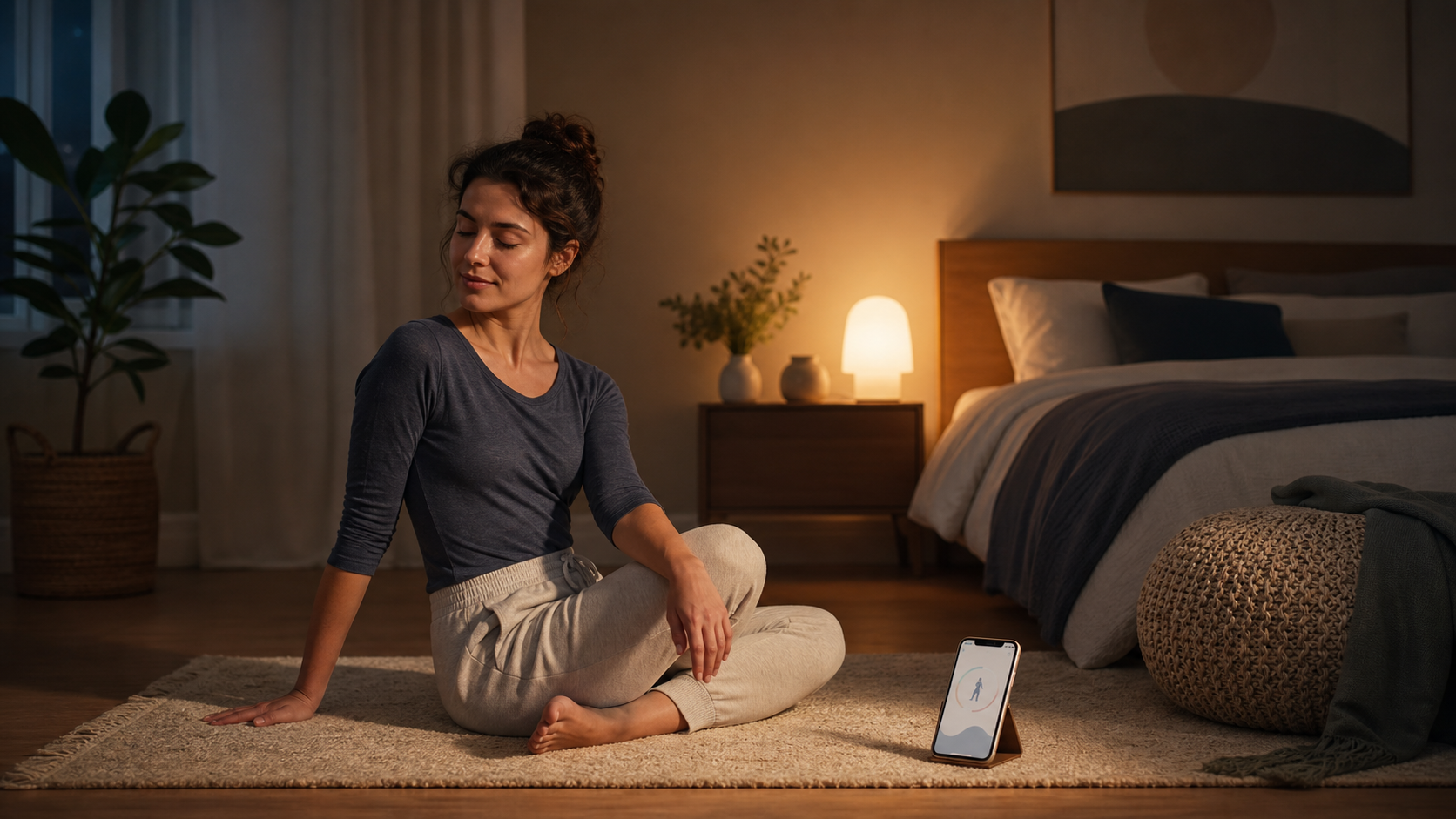
The worst bedtime routine is the one that asks your tired brain to become a fitness programmer at 10:45 p.m. You search for a video, compare routines, wonder if the stretch is supposed to feel intense, and suddenly "relaxing" has become another chore.
Use these stretches for better sleep when you want a simpler outcome: less stiffness, fewer decisions, and a routine quiet enough to repeat. The goal is not to force sleep or win flexibility tonight. The goal is to make the end of the day easier to recognize.
What are the best stretches for better sleep?
The best stretches for better sleep are gentle, predictable movements that help you downshift without raising effort. Start with the neck and shoulders, move through the back and hips, and finish with breathing instead of adding one more intense hold.
Stretches for better sleep are short, low-intensity movements used as a bedtime wind-down cue for everyday stiffness. They are not a treatment for insomnia, pain, injury, or medical conditions.
Mayo Clinic's stretching guidance gives the right guardrails for bedtime: do not bounce, do not force range, and do not treat pain as progress. At night, a smaller stretch you can breathe through usually beats a deeper one you have to survive.
What 7-minute routine should I use tonight?
Use one routine with a clear start, a clear ending, and no optional rabbit holes. If you feel yourself negotiating with the plan, make the range smaller or cut the routine to three minutes.
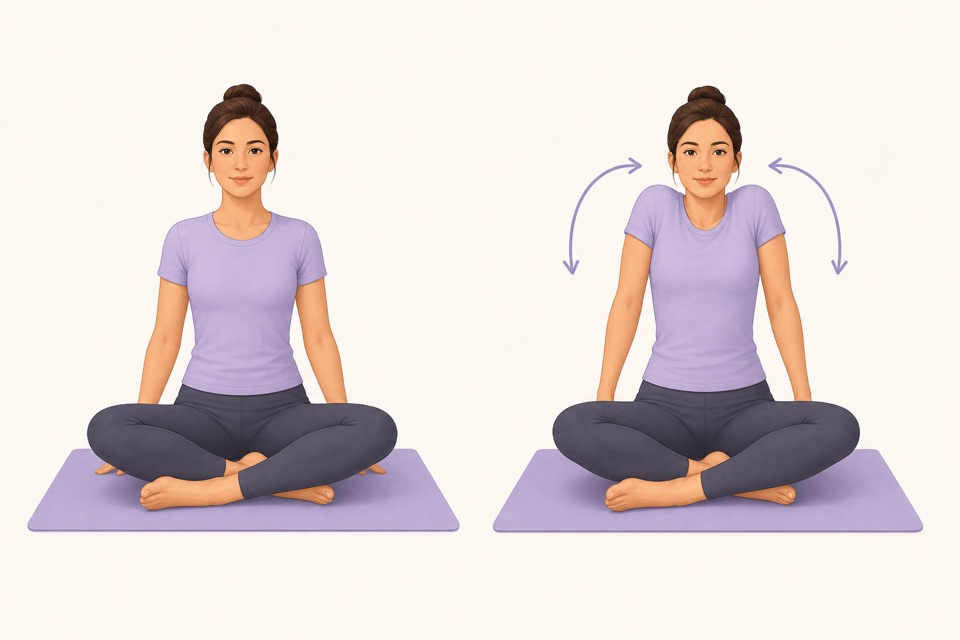
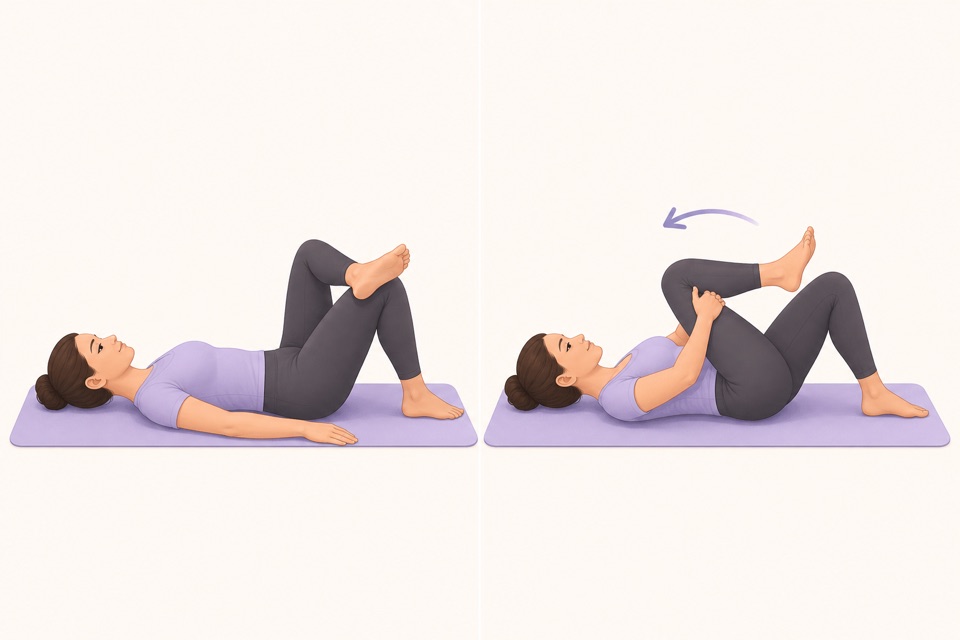
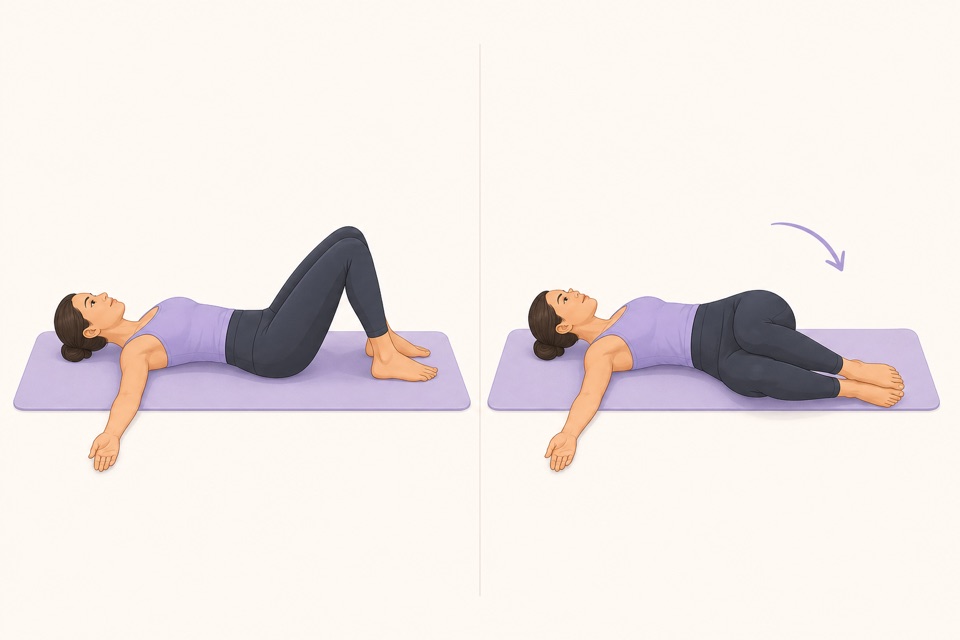
| Move | Time | Why it helps the routine feel sleep-friendly | Easier version | | --- | ---: | --- | --- | | Five slow breaths | 45 sec | Creates a start cue before movement | Sit against pillows | | Shoulder rolls | 60 sec | Lets the upper body leave desk mode | Move one shoulder at a time | | Gentle neck turns | 45 sec | Reduces screen-posture tension without intensity | Look only halfway | | Bent-knee forward fold | 75 sec | Eases back and hamstring stiffness | Rest elbows on thighs | | Figure-four hip stretch | 2 min | Targets glutes and outer hips after sitting | Keep the crossed leg farther away | | Lower trunk rotations | 90 sec | Adds low-effort spinal movement | Rock knees only halfway | | Quiet breathing | 75 sec | Gives the routine a clean ending | Lie on your side if better |
If your whole evening routine needs structure, pair this with the broader night stretching routine. If you are too tired to get on the floor, use bedtime stretches in bed and let the tiny version count.
If you mainly want to know what the habit is realistically doing, read stretching before bed benefits before chasing a longer routine.
From Wiggle
Recommended moves
How do I make bedtime stretching help instead of wake me up?
Keep bedtime stretching boring in the best way: same order, same timer, low effort, dim light, and a hard stop before the routine becomes training. CDC sleep guidance focuses on consistent sleep habits, and a gentle stretch routine works best when it behaves like one small habit, not a dramatic fix.
Use this sleep-friendly checklist:
- Keep the first routine under eight minutes.
- Choose mild tension, not an impressive end range.
- Breathe normally through every stretch.
- Avoid bright scrolling once the routine starts.
- End with the same final breathing cue.
- Repeat the same sequence for a week before changing it.
- Stop if a move makes you feel more alert, irritated, or braced.
If your main issue is lower-back discomfort at night, read how to sleep with lower back pain before adding more stretches. If your legs are the loudest part, use leg stretches before bed. If the stuck feeling is mostly in the hips and glutes, try hip stretches before bed.
For a narrower back-specific wind-down, use lower back stretches before bed instead of turning a full-body routine into extra work.
Should I stretch on the floor, in bed, or with an app?
Choose the setup that lowers friction without making the movement feel unsafe. The floor gives you room, the bed makes starting easier, and a guided app helps when decision fatigue is the real problem.
| Tonight's situation | Best choice | Why | | --- | --- | --- | | You still have some energy | Floor or mat | More room for hips and rotations | | You are already under the covers | In-bed routine | Starting matters more than perfect setup | | Your back dislikes soft surfaces | Floor | More even support | | You keep searching for routines | Guided app | The next move and timer are already chosen | | A stretch feels unstable | Smaller range or skip it | Calm beats completeness |
For a mat-based version, use good stretches before bed. For a no-decision app setup, stretching app for sleep explains what to look for before you save a bedtime routine.
What should I avoid before sleep?
Avoid anything that turns the routine into effort: bouncing, aggressive hamstring stretches, deep twists, intense long holds, breath-holding, and pain. Before sleep, the right stretch should feel mild enough that stopping is easy.
The fast decision rule is this: if a stretch makes you brace, back off. If it creates sharp pain, tingling, numbness, dizziness, weakness, radiating symptoms, chest symptoms, or anything that worries you, stop and get qualified guidance.
Use these stretches for mild everyday stiffness only. New, severe, persistent, injury-related, or medical-condition-related symptoms deserve professional advice instead of a harder routine.
How can Wiggle make this easier?
Wiggle removes the decision layer from bedtime stretching: what move comes next, how long to hold it, when to stop, and whether a short routine still counts. That is useful because the end of the day is exactly when complicated plans die.
Save one 5 to 8 minute sleep wind-down in Wiggle and repeat it for the next seven nights. Same order, same timer, same final breathing cue. After a week, adjust the routine based on what your body actually repeats.
Sources
Why we keep it gentle
These guides are written for everyday stiffness and habit-building. They are grounded in mainstream guidance on flexibility, movement, and when to seek medical help.
- Stretching: Focus on flexibilityMayo Clinic
- About SleepCDC
- Physical Activity Guidelines for AmericansU.S. Department of Health and Human Services
- Back painMedlinePlus
FAQ
Questions people ask
What are the best stretches for better sleep?
The best stretches for better sleep are slow, low-intensity moves that reduce bedtime friction: shoulder rolls, gentle neck turns, bent-knee forward folds, figure-four hip stretches, lower trunk rotations, and quiet breathing. Keep the routine short enough to repeat.
How long should I stretch before sleep?
Start with 5 to 8 minutes. That is long enough to move the neck, shoulders, back, hips, and legs without turning bedtime into a workout or another decision-heavy task.
Can stretching guarantee better sleep?
No. Stretching is not a sleep treatment and cannot guarantee better sleep. It can be a useful wind-down cue when it stays gentle, predictable, and part of a broader bedtime routine.
What stretches should I avoid before sleep?
Avoid bouncing, intense holds, deep end-range twists, aggressive hamstring stretching, and anything that causes sharp pain, tingling, dizziness, weakness, or more alertness. Bedtime stretching should feel boring and easy.
How can Wiggle help with stretches for better sleep?
Wiggle gives you a timed, guided bedtime routine so you do not have to choose moves when you are already tired. Save one short sequence, repeat it for a week, and let the app handle the order and timer.