Wiggle guide
Morning Stretching Routine: A Gentle Way to Start the Day
A short morning stretching routine for stiff hips, sleepy shoulders, and an easier first move out of bed.
morning stretching routine
Morning stiffness is often less about needing a hard routine and more about needing a gentle first transition. You are going from sleep to movement. The routine should respect that.
Wiggle can help by giving the morning a default sequence, so you do not have to make decisions while half-awake.
If long holds feel like too much right after waking, start with wake up stretches or a morning mobility routine first, then come back to this stretch-focused version. If you are new and want the lowest-friction start, use morning stretches for beginners. If you want the shortest routine for groggy mornings, use morning stretches for energy.
Quick answer
A morning stretching routine should start small: breathe, move joints gently, wake up hips and shoulders, then stand up slowly. Keep the routine easy enough to do before motivation arrives.
5-minute morning routine
- Breathe with knees bent for 30 seconds.
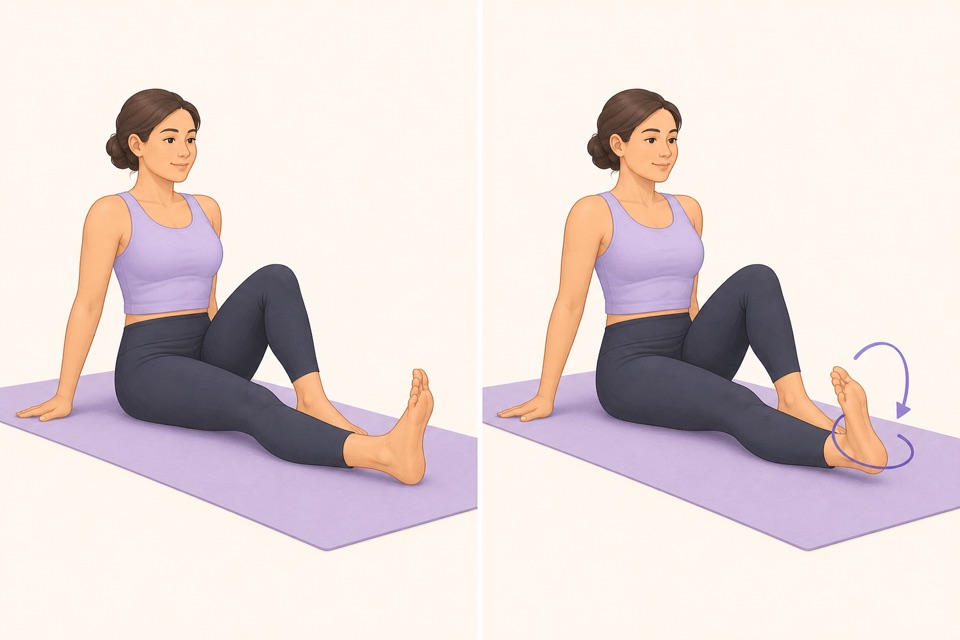
- Ankle circles for 30 seconds.
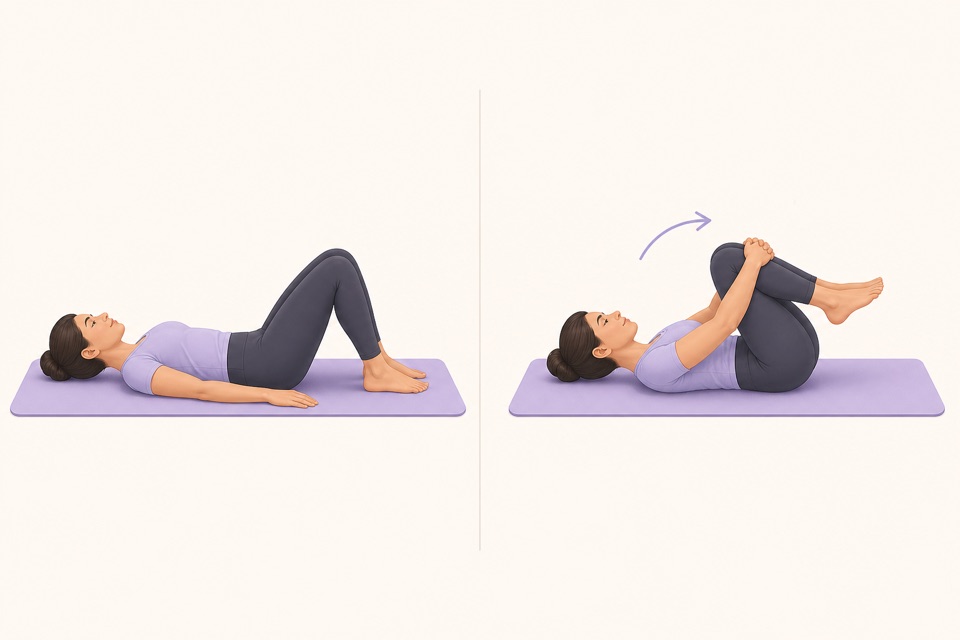
- Knees-to-chest stretch for 60 seconds total.
- Lower trunk rotation for 60 seconds.
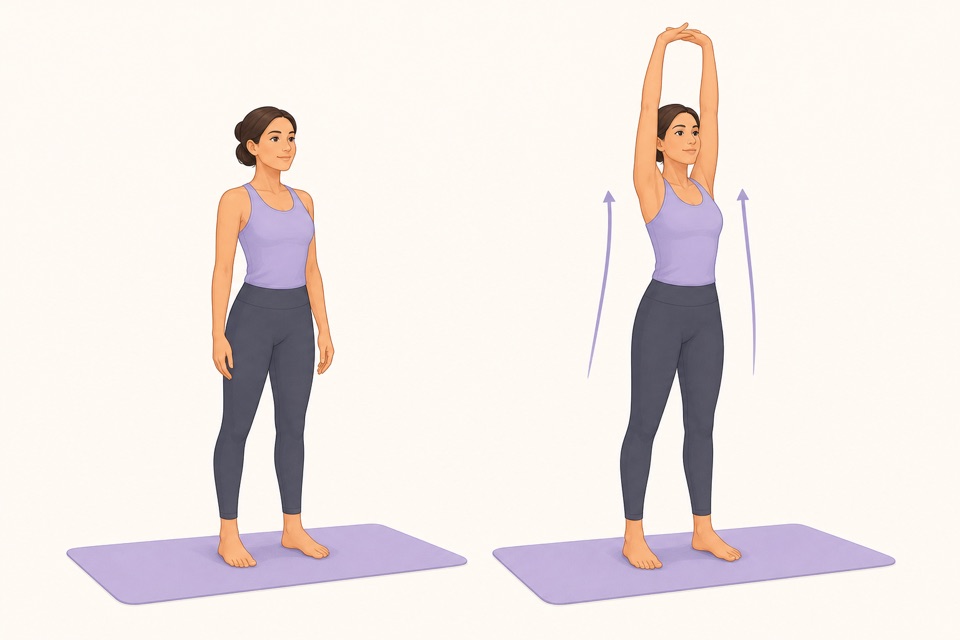
- Overhead reach after sitting up for 45 seconds.
- Standing calf stretch for 60 seconds total.
- Slow walk around the room for 45 seconds.
Make it easier to repeat
- Keep the routine under five minutes at first.
- Use the same order every morning.
- Avoid deep end ranges immediately after waking.
- Pair it with water, coffee, or your first alarm.
- Let the session count even if it is very gentle.
Common mistakes
- Starting too intense.
- Holding your breath.
- Checking messages before moving.
- Changing the routine every day.
- Treating a missed morning as failure.
From Wiggle
Recommended moves
Turn it into a routine
Morning stretching works when it becomes a cue: wake up, move gently, then enter the day.
This is where a guided app helps: the fewer decisions you make, the more likely you are to repeat the session. A visible timer, a clear next movement, and a saved routine remove the tiny bits of friction that usually stop a good intention.
Sources
Why we keep it gentle
These guides are written for everyday stiffness and habit-building. They are grounded in mainstream guidance on flexibility, movement, and when to seek medical help.
- Stretching: Focus on flexibilityMayo Clinic
- Physical Activity Guidelines for AmericansU.S. Department of Health and Human Services
- Back painMedlinePlus
FAQ
Questions people ask
How long should I do morning stretching routine?
Start with 3 to 10 minutes and keep every stretch mild. A shorter routine you repeat is more useful than a long routine you avoid.
Can beginners use this routine?
Yes. Choose a comfortable range of motion, move slowly, breathe normally, and skip any stretch that does not feel right for your body.
When should I stop or skip this routine?
Use this for mild everyday stiffness only. Stop if you feel sharp pain, numbness, dizziness, weakness, or symptoms that worry you. Ask a qualified professional for new, severe, persistent, radiating, injury-related, or medical-condition-related pain.
How should the stretch feel?
Aim for mild tension that lets you breathe normally. Avoid bouncing, forcing range, or treating pain as progress.
How can Wiggle help with this routine?
Wiggle keeps the routine timed and simple, shows the next move, and saves the habit loop so you do not have to rebuild the session each time.