Wiggle guide
Pelvic Stretches: A Gentle 6-Minute Routine
A simple pelvic mobility routine for ordinary stiffness after sitting, with easy modifications.
pelvic stretches
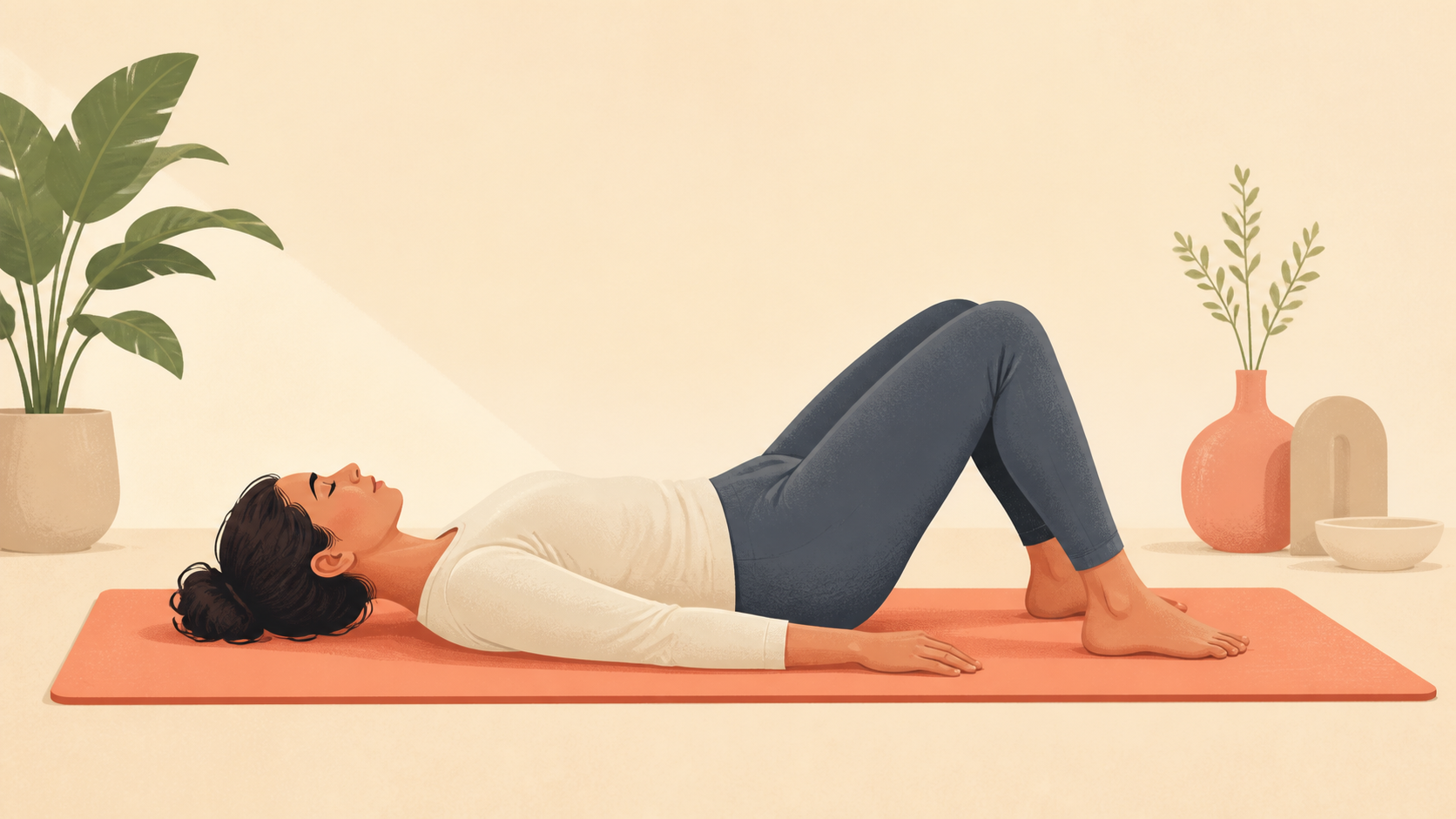
A stiff feeling around the pelvis can make it tempting to force one deep hip stretch. That usually creates more effort than clarity. For ordinary mild stiffness, the easier approach is to move several nearby areas—the hips, glutes, inner thighs, and lower back—through small, comfortable ranges.
Use this fast rule: walk for one minute, then continue only if the feeling stays mild or eases. The routine below takes six minutes, needs no special equipment, and gives you an easy version of every position.
What are pelvic stretches?
Pelvic stretches are gentle movements aimed at the muscles and joints surrounding the pelvis, including the hips, glutes, inner thighs, and lower back. They are not one special category of exercise. A useful routine combines different directions instead of repeatedly pulling on the area that happens to feel tight.
A pelvic stretch is a comfortable movement that changes the position of the hips, lower spine, or thighs to create mild tension or easier motion around the pelvic region. It is not a test, treatment, or way to identify why pelvic pain is happening.
| What you notice | Easiest starting option | Skip for now | | --- | --- | --- | | General stiffness after sitting | Small pelvic tilts, then walk | Deep end-range holds | | Tightness at the front of a hip | Supported hip-flexor stretch | Arching the lower back | | Glute or outer-hip tension | Supine figure four | Pulling the knee hard | | Inner-thigh stiffness | Supported butterfly | Pushing the knees down | | Sharp, severe, or worsening pain | Stop and seek guidance | Stretching through symptoms |
What are the best pelvic stretches for general stiffness?
Start with a supine pelvic tilt, then add a half-kneeling hip-flexor stretch, a figure-four stretch, and a supported butterfly. These four movements cover gentle trunk motion, the front and back of the hip, and the inner thighs. You do not need to feel all four intensely for the routine to be useful.
From Wiggle
Recommended moves
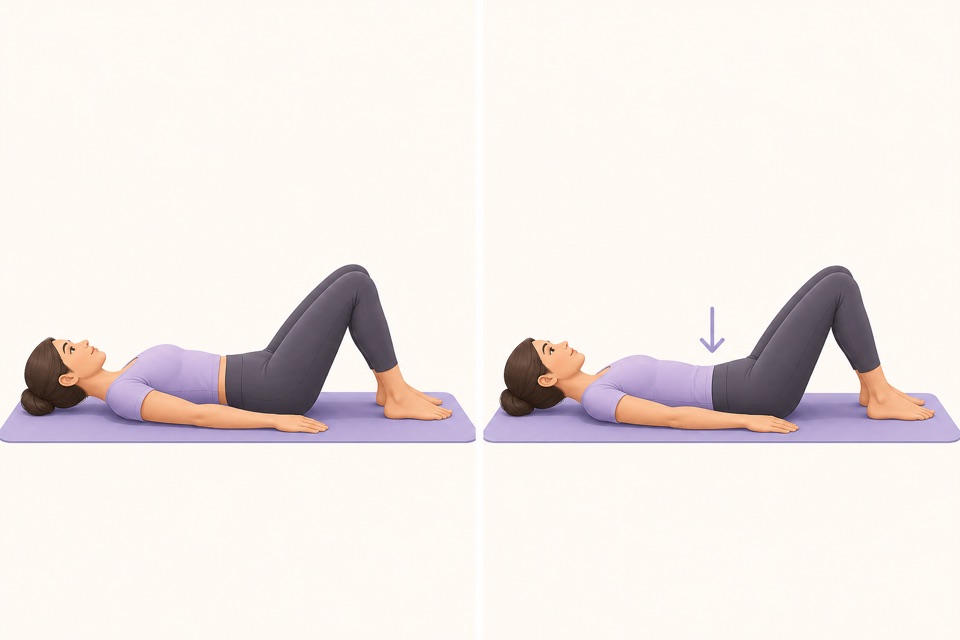
1. Supine pelvic tilt
Lie on your back with knees bent and feet flat. Gently tip the pelvis so the lower back becomes a little heavier against the mat, then return to neutral. Do eight slow repetitions without squeezing hard or holding your breath.
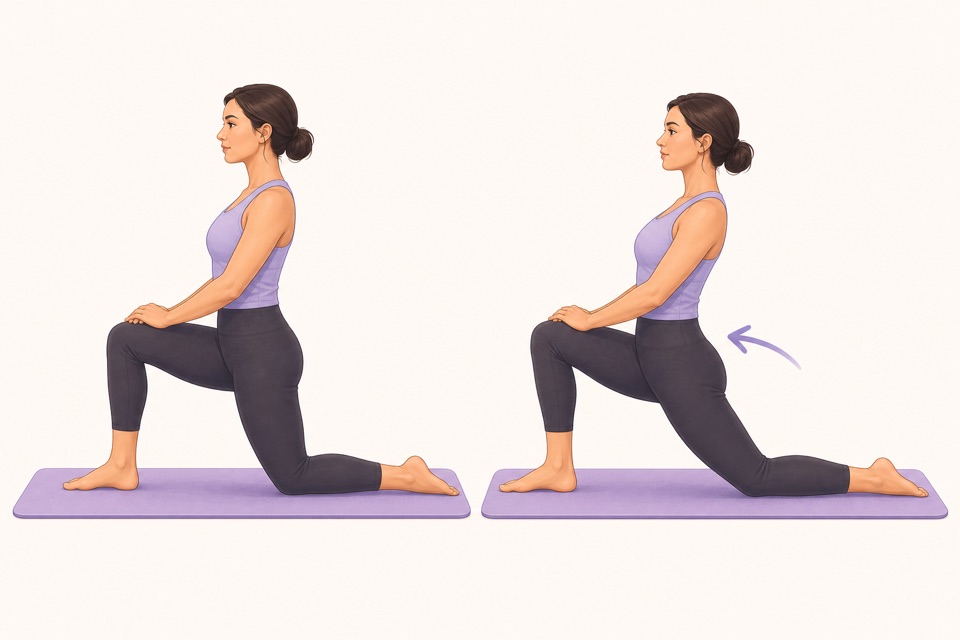
2. Half-kneeling hip-flexor stretch
Kneel on a cushion with one foot forward and hold a chair for balance. Keep the ribs stacked over the pelvis and shift forward a few centimetres until the front of the back hip feels mild tension. Hold for 20 seconds per side. Use a standing version if kneeling is uncomfortable.
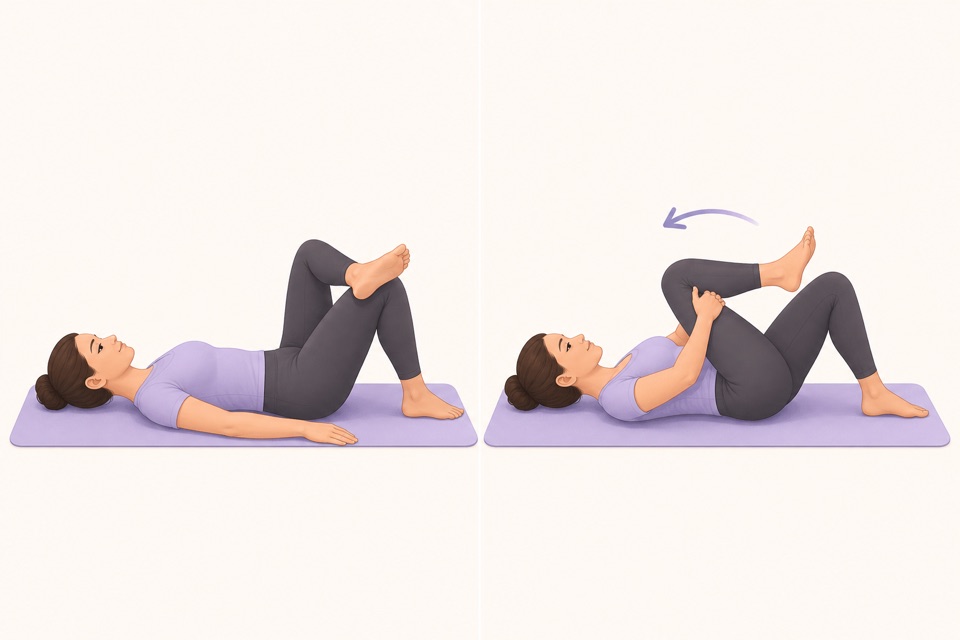
3. Supine figure four
Place one ankle across the opposite thigh while lying down. Stay there, or bring the supporting thigh slightly closer without pulling hard. Hold for 20 seconds per side while keeping the face and shoulders relaxed.
4. Supported butterfly
Sit against a wall or on a folded blanket, bring the soles of the feet toward each other, and support each thigh with a cushion if needed. Hold for 30 seconds. Let gravity do less than you think; do not press the knees toward the floor.
How do you do a six-minute pelvic mobility routine?
Warm up for one minute, use four minutes for controlled mobility and short holds, then finish with relaxed breathing and a walking check. This sequence keeps the effort low and makes it easy to notice whether movement is helping. One comfortable round is enough.
| Time | Movement | Comfort cue | | --- | --- | --- | | 0:00-1:00 | Easy walk | Symptoms stay mild or ease | | 1:00-2:00 | Eight pelvic tilts | Smooth motion; normal breathing | | 2:00-3:00 | Hip-flexor stretch | About 20 seconds per side | | 3:00-4:00 | Figure four | No hard pulling on the thigh | | 4:00-5:00 | Supported butterfly | Knees fully supported if needed | | 5:00-6:00 | Five slow breaths, then stand | Walking feels the same or easier |
Mayo Clinic advises warming up before stretching, moving smoothly without bouncing, and aiming for tension rather than pain. Those rules are more useful than chasing a particular range or copying someone else's position.
Why can the pelvic area feel tight after sitting?
Long sitting keeps the hips and trunk in a limited set of positions, so the first few steps afterward can feel stiff. The sensation may involve several tissues rather than one “tight” muscle. A brief movement break can change the input without proving anything is shortened or out of alignment.
If the front of the hip is the obvious focus, use this hip-flexor stretching guide. For a broader routine that begins at a chair, try lower back stretches after sitting. Choose one sequence rather than stacking multiple similar routines.
The U.S. physical activity guidelines encourage adults to move more and sit less. In practice, changing position regularly is usually more realistic than holding one supposedly perfect posture all day.
Are pelvic stretches the same as pelvic-floor stretches?
No. General pelvic stretches move the hips, thighs, glutes, and lower back. Pelvic-floor exercises address a specific group of muscles inside the pelvis and may involve relaxation, coordination, or strengthening depending on the person. Generic advice cannot determine which approach you need.
If you have pelvic pain, bladder or bowel symptoms, pain during sex, pregnancy-related concerns, or symptoms after surgery, ask an appropriately qualified clinician or pelvic-health physiotherapist for individual guidance. More stretching is not automatically the right answer.
When should you stop pelvic stretching?
Stop if movement causes sharp, severe, spreading, or worsening pain. New numbness, weakness, fever with pain, symptoms after a significant fall, or pain that repeatedly limits normal activity deserve medical assessment. Sudden severe pelvic pain can require urgent evaluation.
Seek urgent care for loss of bladder or bowel control, numbness around the groin, fainting, heavy unexpected bleeding, or sudden severe symptoms. NHS and MedlinePlus guidance makes clear that pelvic and back pain have many possible causes; keep this routine for ordinary mild stiffness, not unexplained or escalating pain.
How do you make pelvic mobility easier to repeat?
Keep the routine short and attach it to a reliable cue: after a long work block, before an easy walk, or when you finish your usual workout. Use the same sequence for a week and judge it by comfort and consistency, not by how far your knees or hands travel.
Wiggle can guide the order and time each position so you do not need to build a routine while already feeling stiff. For extra glute emphasis, compare this routine with gentle glute stretches, then save the one that best fits your day.
Sources
Why we keep it gentle
These guides are written for everyday stiffness and habit-building. They are grounded in mainstream guidance on flexibility, movement, and when to seek medical help.
- Stretching: Focus on flexibilityMayo Clinic
- Physical Activity Guidelines for Americans, 2nd editionU.S. Department of Health and Human Services
- Back painMedlinePlus
- Pelvic painNHS
FAQ
Questions people ask
What are pelvic stretches?
Pelvic stretches are gentle movements for the muscles and joints around the hips, lower back, glutes, and inner thighs. A balanced routine may combine pelvic tilts, hip-flexor stretches, figure-four stretches, and a supported butterfly. They can help ordinary stiffness feel easier, but they do not diagnose or treat pelvic pain.
What is the best stretch for a tight pelvis?
There is no single best stretch because a tight feeling can involve different areas. Start with a small pelvic tilt, then choose one hip-front, glute, or inner-thigh stretch based on where you feel mild tension. Use a comfortable range and stop if symptoms are sharp, spreading, or worsening.
How often can I do pelvic stretches?
For ordinary stiffness, a short gentle routine can fit into most days if it feels comfortable during and afterward. Start with one round, avoid forcing range, and allow recovery if the area feels irritated. Persistent or recurring pelvic pain should be discussed with a qualified healthcare professional.
Can pelvic stretches help after sitting?
Pelvic stretches may provide a useful movement break after sitting because they move the hips, glutes, inner thighs, and lower back through comfortable ranges. Walk for a minute first, then use two or three easy movements. Frequent posture changes are usually more practical than searching for one perfect posture.
When should I avoid pelvic stretches?
Stop and seek professional advice for severe or worsening pain, symptoms after a fall, pain with fever, new numbness or weakness, or pain that repeatedly limits daily activity. Seek urgent care for loss of bladder or bowel control, numbness around the groin, or sudden severe symptoms.