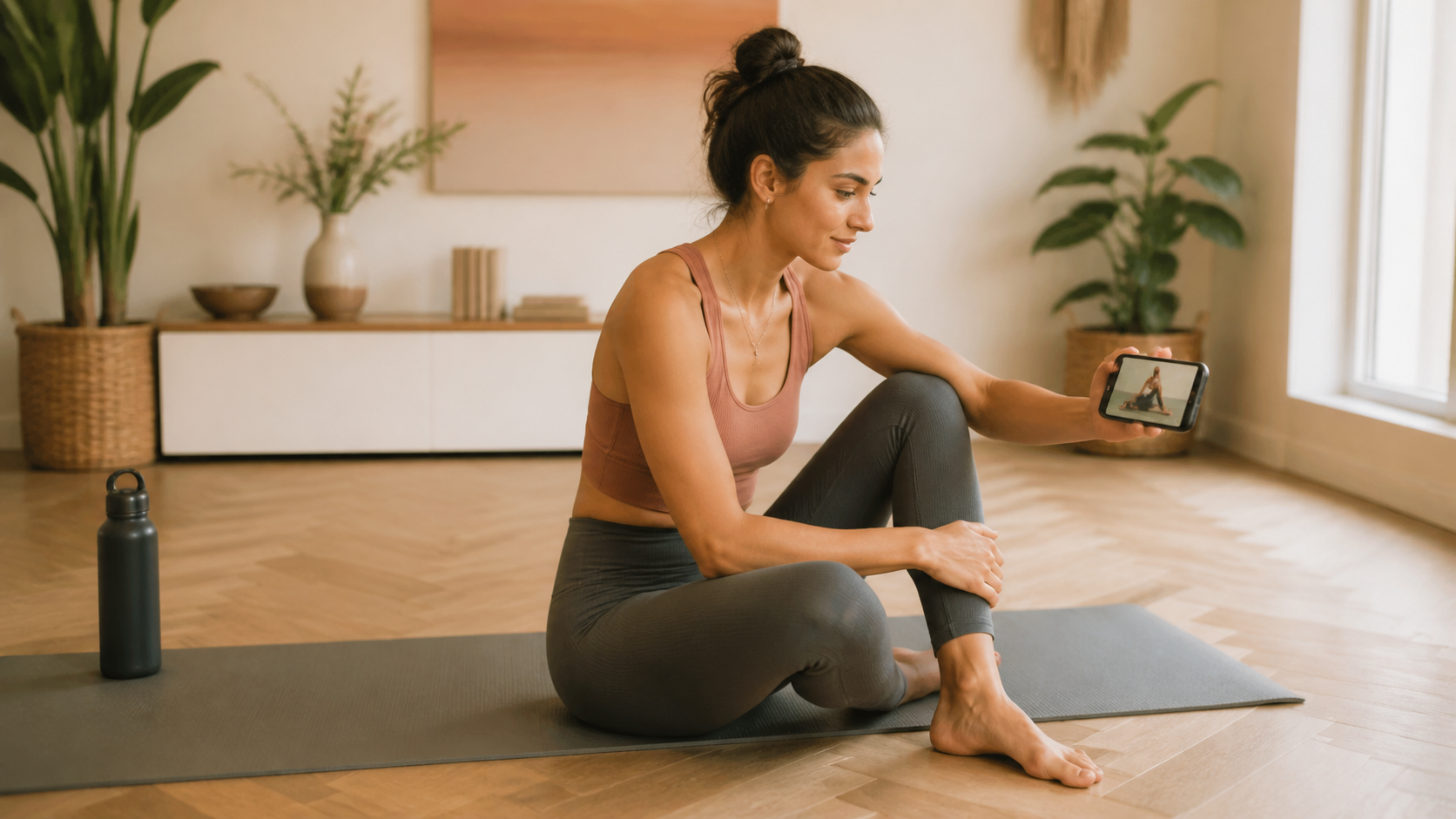
Stretching App After a Workout: Build a 7-Minute Cooldown
Choose a stretching app after a workout with a simple 7-minute cooldown, clear timers, useful body-area routines, and honest stop signs.
stretching app after workout
You finish the workout, open a random stretching video, and spend more time choosing than cooling down. Or you skip the whole thing because the routine looks like another workout. Neither helps you build a repeatable finish.
Use this fast rule: move easily for two or three minutes, then choose a five-to-ten-minute routine for the areas you trained. A good stretching app after a workout handles the sequence and timer while letting you swap any movement that does not feel right.
What is a stretching app after a workout?
A stretching app after a workout is a guided mobile tool that organizes a short cooldown into timed movements or comfortable holds. It should let you choose the muscles you trained, preview the sequence, pause easily, and replace positions without losing the routine.
A post-workout stretching app is a consistency tool for your cooldown, not a treatment or a guarantee against soreness. Its best job is removing small decisions when you are tired: what comes next, how long is left, and whether seven minutes is enough.
If you need a broader app comparison, start with the best stretching app. Athletes deciding between pre-training and post-training routines should use the stretching app for athletes guide.
What is the fastest post-workout routine?
Use a seven-minute structure: two minutes of easy movement, four minutes of comfortable stretches for the muscles you used, and one quiet minute to finish. Keep breathing normally and never force a position. The routine should leave you settled, not exhausted.
| Time | What to do | App feature that helps |
| --- | --- | --- |
| 0:00–2:00 | Walk, pedal, or move easily | A visible transition timer |
| 2:00–3:00 | Choose one upper-body area | Body-area filters |
| 3:00–5:00 | Choose hips or legs | Clear side switches |
| 5:00–6:00 | Use one full-body movement | Easy alternatives |
| 6:00–7:00 | Breathe and finish gently | Calm audio and a clear end |
The American Heart Association recommends lowering exercise intensity gradually during a cooldown. That makes an easy transition a better first step than dropping directly into the deepest stretch you can manage.
Which app features matter after training?
The most useful post-workout features are cooldown labels, short session lengths, body-area filters, clear timers, side-switch cues, movement previews, and substitutions. These reduce friction without turning recovery into a complicated scorecard.
Check these before paying:
Can you start a cooldown in under 30 seconds?
Are five-, seven-, and ten-minute sessions available?
Can you filter by legs, hips, back, shoulders, or full body?
Does every difficult position have an easier alternative?
Can you pause or skip without restarting?
Does the app avoid promises about injury prevention, pain relief, or eliminating soreness?
Can you save one reliable routine for repeat workouts?
Do not expect stretching alone to prevent delayed-onset muscle soreness. A Cochrane review found that stretching before or after exercise does not produce a clinically important reduction in soreness. Stretch because a gentle cooldown feels useful or because you are building flexibility—not because an app promises you will never feel tomorrow's workout.
That distinction is a useful buying filter. Honest apps describe routines, timers, and habits. Weak apps sell certainty. Your recovery also depends on the workout, gradual training progression, food, fluids, rest, sleep, and individual response.
Why do app-led cooldowns fail?
Cooldowns fail when the routine is too long, too generic, or too intense for the workout that just happened. They also fail when users must browse a giant exercise library while tired. The fix is one short saved default with obvious body-area swaps.
| Failure mode | Fast fix |
| --- | --- |
| You skip because it takes 20 minutes | Save a seven-minute version |
| The sequence ignores today's workout | Filter by the muscles used |
| A pose feels too aggressive | Swap it or stop |
| You keep checking the clock | Use a visible timer and audio cue |
| The app promises no soreness | Choose a product with honest language |
Mayo Clinic advises smooth stretching without bouncing and says to expect tension rather than pain. Stop for sharp or worsening pain, major swelling, numbness, tingling, sudden weakness, instability, or symptoms after an acute injury. A general app is not a rehabilitation plan.
How do I make the cooldown automatic?
Attach the routine to the last action of your workout: finish the final set, start two minutes of easy movement, then open the same saved cooldown. Keep the app on your home screen and use one default routine until repetition feels easier than choosing.
Open the Wiggle download page, choose the area you trained, and save a short cooldown for your next session. If habit friction is the bigger issue, the daily stretching app guide shows how to make a small routine repeatable.
Sources
Why we keep it gentle
These guides are written for everyday stiffness and habit-building. They are grounded in mainstream guidance on flexibility, movement, and when to seek medical help.
The best stretching app after a workout is one that offers short cooldown routines, clear timers, body-area choices, comfortable alternatives, and easy repeat sessions. It should help you lower the pace and move gently without claiming that stretching prevents soreness or fixes an injury.
How long should I stretch after a workout?
Start with five to ten minutes. Choose a few muscles used in the workout, move or hold each position without bouncing, and keep the intensity comfortable. A short cooldown you repeat is more useful than a long routine you regularly skip.
Should I stretch immediately after exercise?
First let your breathing and heart rate settle with a few minutes of easy movement. Then use comfortable stretches if they feel good. Do not force deep range simply because your muscles feel warm, and stop if a movement causes pain.
Does stretching after a workout prevent soreness?
Do not choose an app because it promises to prevent delayed muscle soreness. Reviews of research have found little meaningful effect from post-exercise stretching alone. Use a cooldown routine for gentle movement, flexibility practice, and a repeatable transition out of training.
When should I skip app-led stretching?
Skip the routine and seek appropriate medical guidance for sharp or worsening pain, major swelling, sudden weakness, numbness, tingling, instability, or symptoms after an acute injury. A general stretching app cannot diagnose or rehabilitate an injury.